




Fully Automatic High-Precision Visual Positioning Chip Labeling Machine
Product Description

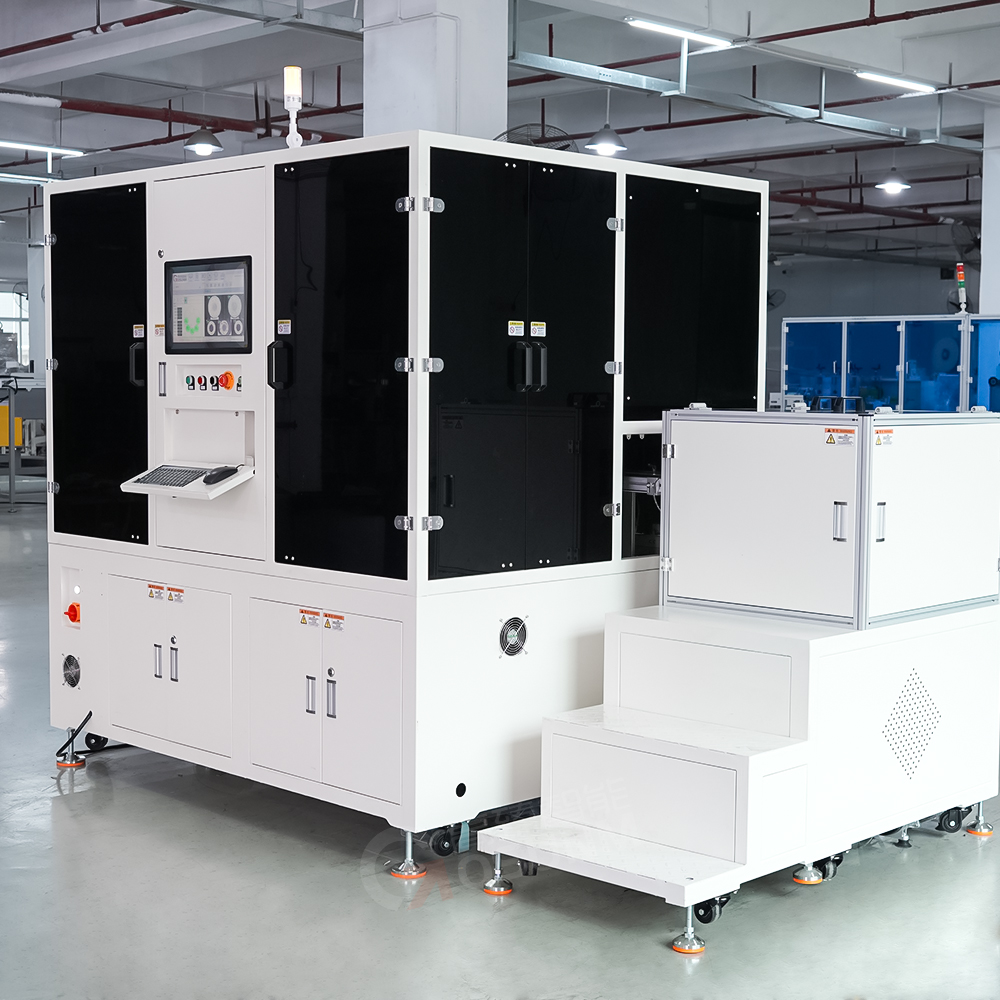
The vision-based positioning labeling machine for chips is an outstanding representative of modern intelligent manufacturing. It seamlessly integrates machine vision, robotics, and automated control to address the high-precision labeling challenges in the manufacturing industry. Not only does it replace human hands, but it also endows machines with "eyes" and a "brain," making it an indispensable key equipment for achieving flexible and intelligent production.
| Labeling Speed | 1,500 units/hour |
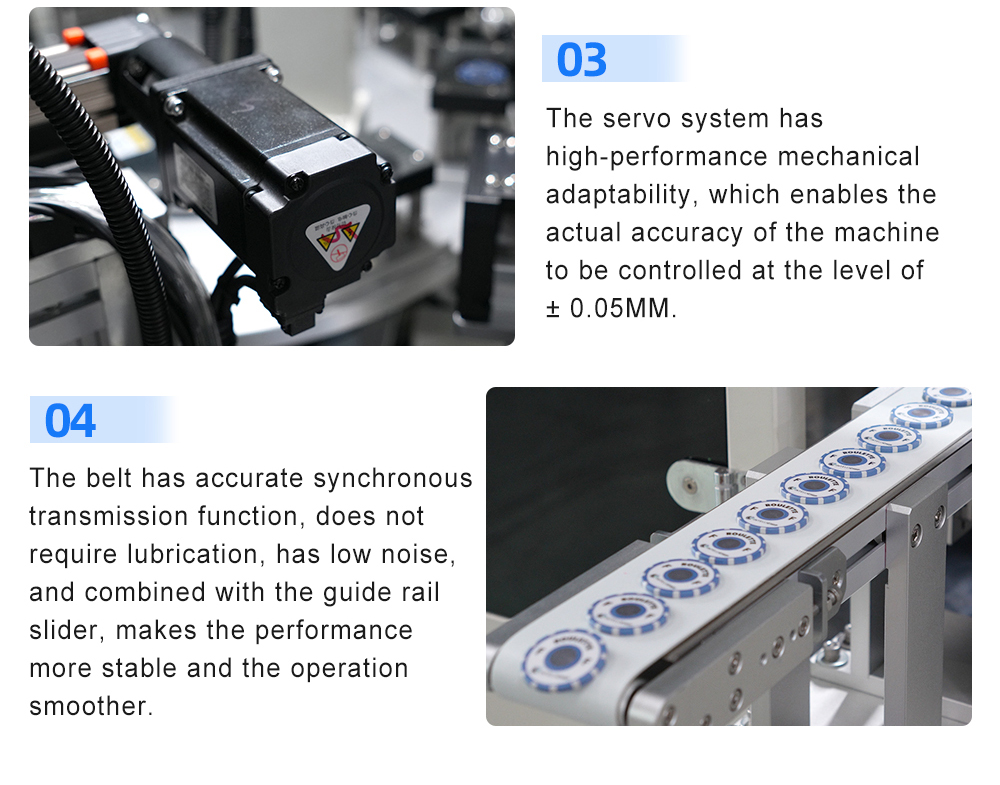
| Labeling Accuracy | ±0.05mm |
| Operating Voltage | AC220V / Single-phase AC 220V |
| Number of Cameras | 5 sets |
| Camera Resolution | 25 megapixels |
Core Components
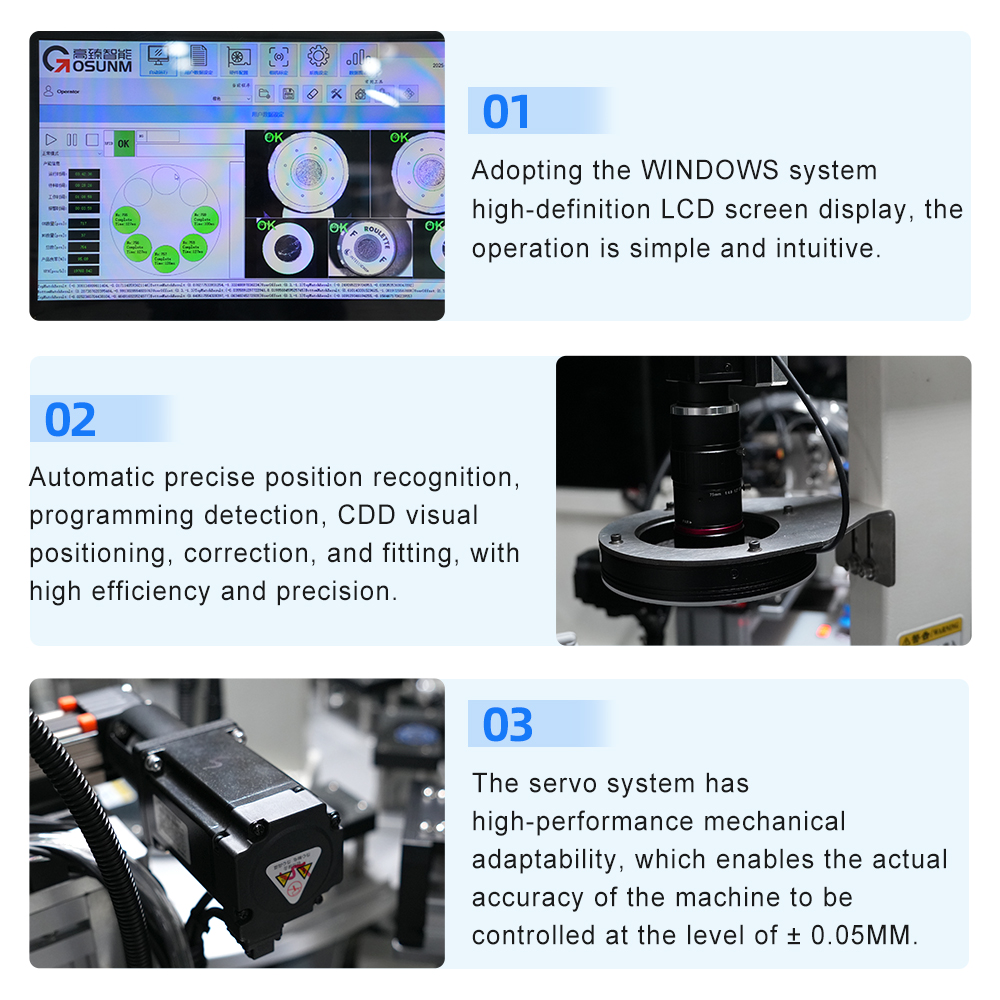
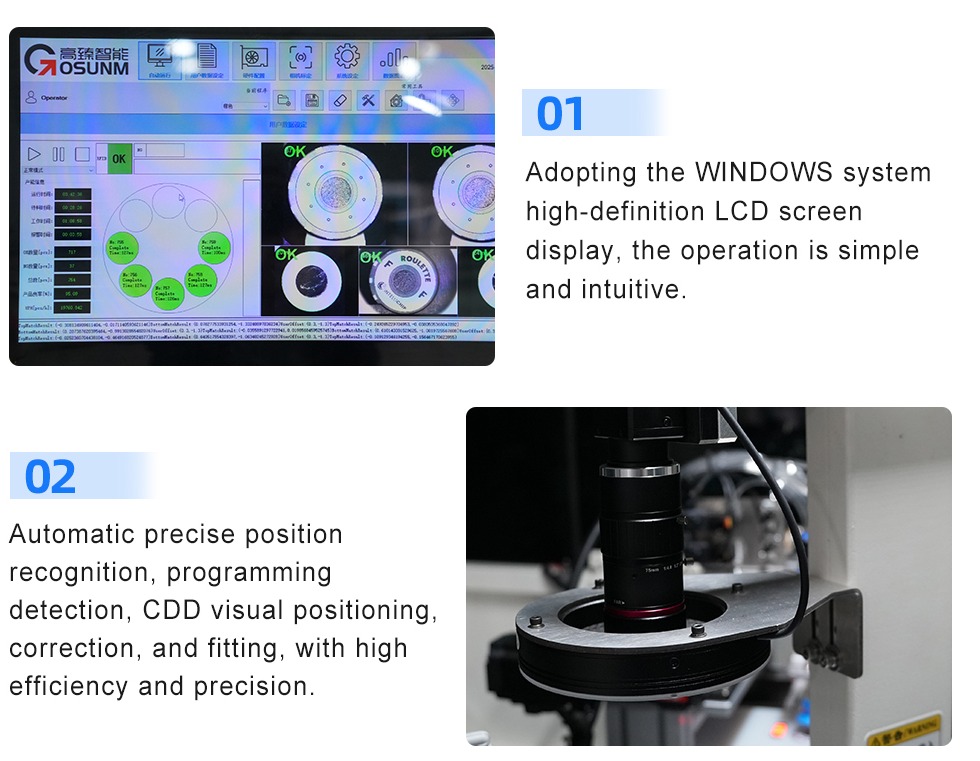
1. Visual Positioning: This serves as the "eyes" and "brain" of the equipment. Industrial cameras capture real-time images of the items, and through image processing algorithms, the precise current position, angle, and orientation of the items are calculated.
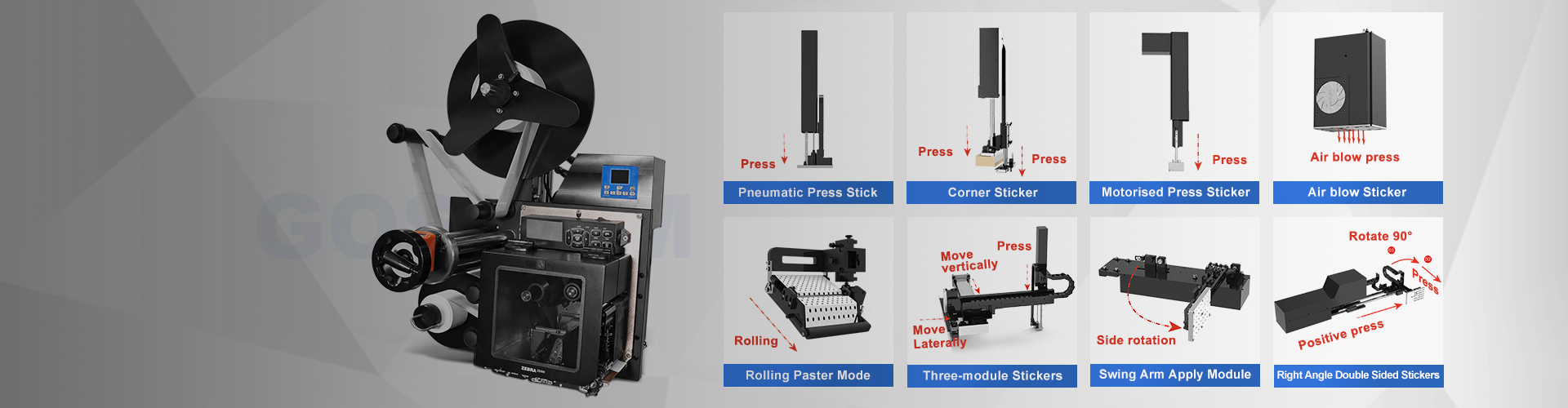
2. Labeling Machine: This acts as the "hand" of the equipment. Based on the coordinates calculated by the vision system, it drives the labeling head to move to the precise position and applies the label to the item at the correct angle.
Working Principle and Process
1. FeedingItems are transported via automated methods such as conveyor belts, vibration plates, or robotic arms to a fixed area beneath the imaging station. Some equipment uses jigs (fixtures) to ensure the items are roughly positioned while allowing for minor deviations.
2. Image Acquisition
An industrial camera (typically a CCD or CMOS camera) is triggered to capture high-speed images of the items below. To obtain the clearest image features, specialized lighting (e.g., ring lights, backlights, coaxial lights) is often used to eliminate glare, enhance contrast, and highlight edges or specific markings on the items.
3. Visual Processing and Positioning
The captured images are transmitted to a vision processing system (typically an embedded industrial computer with professional image processing software such as Halcon or OpenCV).
The software references a pre-defined "template" created during the debugging phase by "teaching" the system using a perfect sample. This template serves as a benchmark for features such as edges, central patterns, specific holes, or existing markings.
Using complex algorithms (e.g., pattern matching, contour extraction, grayscale analysis), the software searches for features matching the template in the current image and calculates the X and Y coordinate offsets and rotational angle (θ value) between the current item and the ideal template.
4. Coordinate Transformation and Motion Control
The vision system sends the calculated offset data to the motion control system (typically a PLC or motion control card).
The motion control system performs coordinate transformation and drives servo or stepper motors to precisely compensate for the offsets, guiding the labeling head to move to the "theoretically correct position."
5. Precision Labeling and Pressing
Once the labeling head reaches the target position, the pre-peeled label is accurately applied to the specified area of the item via pneumatic or electric mechanisms.
A pressing mechanism (e.g., silicone roller, sponge, or cylinder-driven pressure block) often follows immediately to firmly flatten the label, ensuring no bubbles, wrinkles, or weak adhesion.
6. Unloading
The labeled items are transported to the next station (e.g., collection bin, packaging line, or subsequent processing stage).
Features and Advantages
High Precision and ConsistencyOvercomes labeling errors caused by positional deviations in manual placement or traditional labeling methods.
Achieves labeling accuracy of up to ±0.05mm or even higher, ensuring every label is applied in the exact same position.
Strong Adaptability
Variable Input Positions: Eliminates the need for expensive precision jigs to secure items. Allows for certain positional and angular deviations of items on the conveyor, significantly reducing requirements for feeding mechanisms.
Curved Surface Labeling: Enables precise labeling on slightly curved or irregular surfaces through advanced algorithms and specialized mechanical structures.
Intelligence and Flexibility
Versatility: Quickly adapts to new products of different shapes and sizes by switching vision templates and programs, minimizing changeover time.
Data Integration: Can connect to upper-level MES systems to enable data binding (e.g., scanning an item’s QR code and printing/pasting the corresponding label), meeting traceability requirements.
Quality Inspection: Advanced systems can incorporate inspection functions before or after labeling, such as detecting label presence, alignment, print quality, or even defects in the items themselves.
Significant Efficiency Improvement
Fully automated operation with speeds far exceeding manual labor.
Capable of 24/7 continuous operation, drastically reducing labor costs and boosting production efficiency.
Application Scenarios
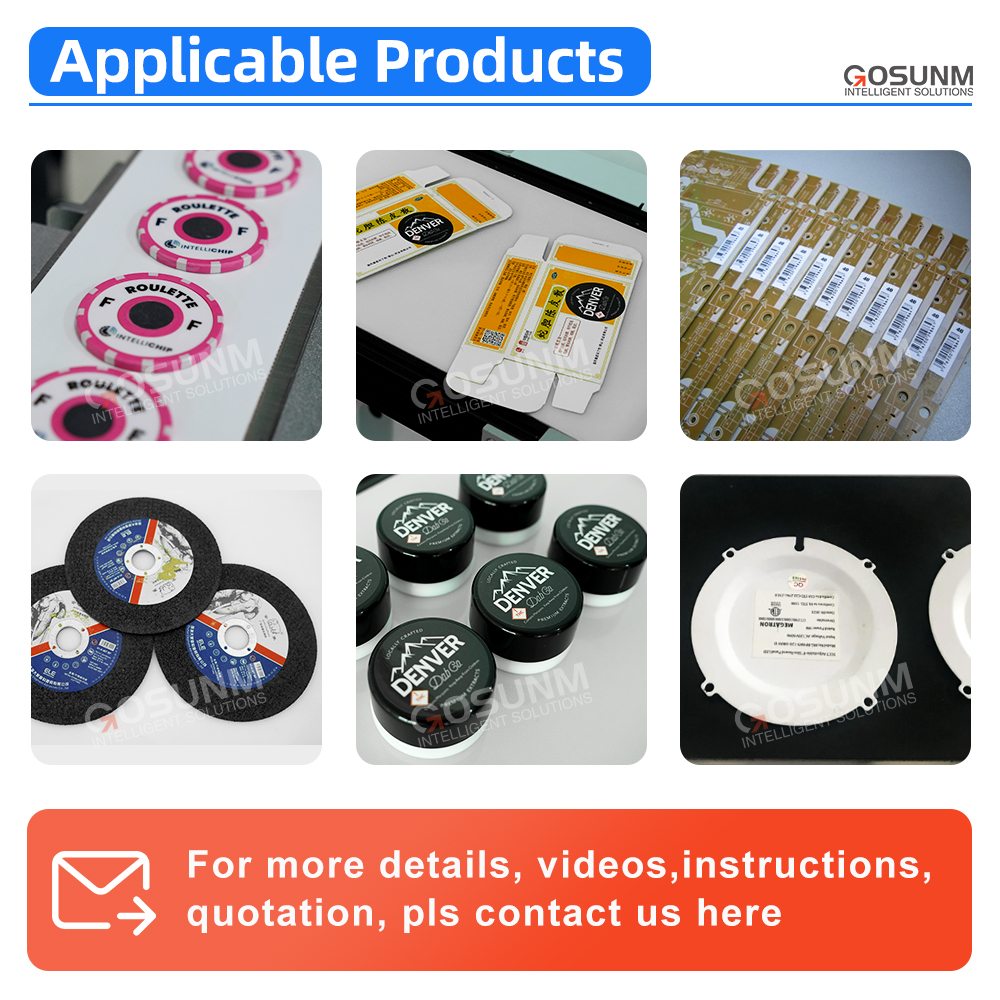
Casino Chips: This is one of the most classic applications. Each chip requires a value or anti-counterfeiting label to be applied precisely at the absolute center. Visual positioning is critical to ensuring both aesthetics and security.Electronics Industry: Applying labels or QR codes onto PCBs, chips, and components with extremely high positional accuracy.
Medical Devices: Labeling syringes, test tubes, and surgical instrument kits demands both high precision and cleanliness.
Automotive Parts: Components such as engine parts and brake pads that require traceability information.
Daily Use & Cosmetics: Applying labels to specific curved surfaces of bottles, jars, and other containers.
Hardware Tools: Labeling irregular products such as screwdriver bits and blades.
| Differences Between Standard Labeling Machines and Vision-Based Positioning Labeling Machines | ||
| Feature | Standard Labeling Machine | Vision-Based Positioning Labeling Machine |
| Positioning Method | Mechanical positioning (e.g., baffles, jigs) | Vision-based image positioning |
| Precision | Low, relies on the accuracy of jigs | Extremely high (up to ±0.1mm level) |
| Adaptability | Poor, requires changing jigs for different products | Strong, easily adapts by switching software templates |
| Cost | Lower | Higher (due to the addition of vision systems) |
| Suitable Products | Regular products with consistent positioning | Irregular products with variable positions |
Video
- Previous:
- Next: High Precision Visual Inspection Labeling Machine


 Privacy settings